The Rebellious Rise of the Autodidact
- Jun 3, 2023
- 8 min read

Eric McShalon is a thirty-four-year-old biology teacher. Every Wednesday afternoon he heads to the Boston Library and stays until closing time at 8:00pm. If he’s free on Saturday and Sunday, or the occasional Friday night, he’ll come back to the library and do it again. You can often find him working alongside Rebecca, a twenty-nine-year-old accounting associate and Mike, a fresh realtor agent. The three of them have stuck to this schedule for over a year and decided to expand it as a meet-up group. You can now find close to thirty members every Wednesday gathered around the fifth desk, silently supporting one another at arm’s length until 7:55, where the collective stands up nobly and starts the journey home to their singular lives. What’s strange about this study group is that none of them are studying for the same exam. They’re not a collection of strangers hacking away at the LSAT, GRE, or MCAT. In fact, none of them are evening studying for a test at all, let alone a unifying course. Rebecca is studying Russian literature with a concentration in Fyodor Dostoevsky. Mike spends his time conceptualizing music theory. And Eric has been diving into thick books of anthropology, graphing an elaborate chart of Egyptian life that stretches from three billion B.C to present day. When I asked them why they didn’t just enroll in a college course and pursue the education they so desperately craved, Eric shrugged and stared at the floor beneath him, “It’s not worth it anymore.”
The above paragraph is a work of fiction. To my knowledge, a group of autodidacts, or self-taught learners, are not sitting together at the fifth table in the Boston Public Library. What is however, of my concerned knowledge, is that the pursuit of higher education is eroding in the United States. You probably don’t need me to reiterate that the country’s student loan debt is sitting at 1.4 trillion dollars, up 600% in the past 20 years. While undergraduate enrollment is not down a catastrophic number (around 2 million since 2010), the suffocating burden of debt is dissuading the dedicated student from even trying. With such a massive burden ingrained in a generation, is it really so far off to picture a growing number of citizens like Eric forgoing diplomas to study their interests in their own time? Sitting in libraries, coffee shops, a second bedroom office space going about their self-taught courses with no debt, name-less? There must exist today a substantial number of individuals chipping away independently at their own muse, subjects outside of working transferrable skills, lighting the match for their own internal desires. A solo pursuit of a noble cause with moderate satiation, but a soul-crushing one all the same. What is it that makes education so priceless and vital; the invigorating content or the positive ripples it adds to a community?
Someone who embodied the balance of education and collaboration was Marina Keegan. Marina was a 2012 Yale English student who sadly passed away a few days after her graduation. She was serious about expending her talents to make the world a better place and pushed her peers to follow suit. A book was made in memory of her, comprised of outstanding fiction and nonfiction works Marina poured her heart into that still resonate with readers today. In her viral essay, The Opposite of Loneliness, Keegan describes the inescapable aching of human connection and recognizes her fear of losing such an inclusive community as she leaves Yale:
Its not quite love and its not quite community. Its just this feeling that there are people, an abundance of people, who are in this together. Who are on your team. When the check is paid and you stay at the table. When its 4am and no one goes to bed. That night with the guitar. That night we can’t remember. That time we did, we went, we saw, we laughed, we felt.
She goes on to proclaim affirmations of success, of anti-aging, anti-time. At twenty-two years old she already felt “that it’s too late to BEGIN a beginning and we must settle for continuance, for commencement.” This is coming from someone only a year into the legal drinking age, not even at a full time New Yorker job, not even putting in her PTO, or turning the Blink-182 twenty-three. To find this fear in a young adult is both relieving and discouraging. Perhaps once we cognitively hold the weighted awareness of time, no matter the age, we are all chained to its angst. Marina goes on to say, as if persuading her own wavering confidence in the outlook of her future, that “we can’t, we MUST not lose this sense of possibility because in the end, its all we have.”
If there’s anything a freshman student has on his first day in lecture hall its possibility. The first strike of autumn, crisp morning air, clouds of leaves redefining themselves, the very chlorophyl defined textbooks carried across campus, fused with the desire for hot coffee and apples. School is the setting for thousands of movie screenplays, future pilot episodes, comedy specials, dating bios, and football rivalries. Its why companies push your routine of buying new shoes at the end of August, why families purchase another round of season tickets and why Etsy businesses ironing school logos onto hats and seat covers are so successful. The Harvard sweatshirts on the Boston Common lawn don’t sell because everyone wants to be a lawyer. They sell for this lifelong search for “the opposite of loneliness,” and the uplifting nature that coincides with being an associated intellectual. Beyond the constructs of prestige or superiority, a university title is a state both the modest and wealthy strive for. It’s an existence that holds priceless mental space the endangered college student revels in, not distracted by new product launches, closing costs, picking up the kids from school, but a concentrated flow on the depths of a subject and the individual’s assessment of its matter. The young adult lives in the assumption of always having this time to learn, from preschool to higher education. They are scammed into thinking that the progression of life will always include the testing of our curiosity, only to find that this intellectual period was in and of itself a luxurious privilege. Graduates are greeted at the end of their tassel transfer to burnt out adults with overflowing trash bins and red-rimmed eyes, nodding at the resume before them only to shake their head at the final signature of an offer letter with a breathless, “I told you so.”
With adulthood the way that it is, I can understand why parents become so absorbed in their child’s academic pursuit and their desire to live through them (High-School-Musical-syndrome if you will). The potential for a top PhD, an international career, a new business of their own, their abandoned dreams and mental clarity now reside in a son, the honors student daughter, beckoning adults to recall and savor a lost time. A time before responsibilities and expectations. A time to grow, inspire, and become, where hope was alive and well. An era where they were asked at backyard barbeques who they wanted to be when they grew up and were given the space, energy, and support to get there. It’s no wonder then that parents can often be a contributing force to the growing student loan debt, as students feel the need to not only satiate their own educational pursuits but fulfill their parent’s cravings as well. Add these stressors to the fear of not having enough time to begin and the rollercoaster of anxiety cycles generation after generation, unable to stop or distinguish who’s is who’s.
We are, undoubtedly, incredibly lucky to live in a time where we have a massive selection of resources to learn when and where we want to. Each passing year a surplus of material is added to the internet, including free lecture videos, Khan academy highlights, Kindle library downloads and the like. Solitary study is not an overly negative approach and is common in the everyday busy bee. It can be cost effective, dynamic, lean, engaging, and well-paced, often a better alternative to the fast-flipping PowerPoint slides of a three hundred plus lecture hall. Ben Franklin is a famous autodidact, admitting that he taught himself how to write better in his autobiography after his father pointed out his lack in the “elegance of expression.” In the philosophical world, Seneca believed that man’s greatest achievements where the products of their seclusion. In seclusion the individual can find their own pacesetting that tells them what to follow, think with, and reason in their own time. It can offer a piece of this precious mental space that modern day adulthood keeps grabbing its sticky fingers into, allowing the individual to breathe and become their own. What independent people autodidacts like Eric miss out on is this connection that is so important to the quality of our life; “that night with the guitar,” the friendships, pre-corporate synergy, the bouncing off of ideas, and collective progress. In plain terms; the sharing.

The question of what happens to a society that continues to keep higher education out of arm’s reach is yet to be answered. Of what happens to a cohort of people that are not gifted the privilege of having space to collaborate in a supportive community we already know. The rise of depression, anxiety, the loss of possibility and optimism that our future depends on, are aftermath roadblocks of the modern-day man. In 2019 its estimated that close to a billion people were living with a mental disorder. In the United States, 55% of adults with a mental illness have never received any treatment. And the increase in mental health disorders is projected to climb well into 2030 with debilitating effects to the global economy and soulful population. In John Shumaker’s essay The Demoralized Mind, he points out that the depression millions of people struggle with may actually be a misdiagnosed case of demoralization, an incurable mindset where people feel bereft of purpose. “Sources of wisdom, social and community support, spiritual comfort, intellectual growth and life education have dried up.”
To the demoralized mind this existence of being “adrift of others and themselves” leads to a void of hopelessness. It also enables Marina’s worst fear; propagating loneliness.
The benefits of community in the academic world can be seen in real-time at college tutoring centers. Connor Sampson is a patient education professional who has helped hundreds of adults with their physics homework. He also happens to be my incredible boyfriend who helped me years ago, kindly redirecting my incorrect solutions to the numbers they should be. Connor has seen the best and worst of education; he’s witnessed talented students drop out due to the high cost of tuition and has watched a 73-year-old obtain a GED with unbelievable progress. But he also knows that a solid support center can improve a student’s performance significantly. Those that attended a tutoring center for 10+ weeks throughout a semester had an 84% chance of receiving a C or better. A student who went to the tutoring center for one week on the other hand, only had a 62% chance. While the autodidact accomplishes a lot in his or her own self-taught progression, the value of a group-based environment with the right tools and resources, subject matter experts, and consistency, is irreplaceable.
To the Eric’s of the world, if you had an extra seat at your library table, I would like to join you. It seems the subjects that do intrigue me are foolish and expensive, with little long-term gain and the odds of success in sub-one decimal fragments. I don’t crave a masters in software engineering and because of that I am at a crossroads between back-breaking debt and siloed scholar. Do I spend money I don’t have to rejoin the “opposite of loneliness,” academic world or do I kludge an isolating self-taught course of free education? Both decisions are limiting in their own constraints, but it doesn’t have to be this way. We don’t have to live in a world where 22-year-olds feel it’s too late to begin. We don’t have to accept an environment where we can only find community and discovery in a college curriculum. We don’t have to exist in a demoralized paradigm alone, without the mindset of possibility. In honor of Marina and her humanitarian aspirations for the world, we MUST not let this crippling sense of intellectual surrender discourage what it means to be human. We MUST let the Mike’s, Rebecca’s and Eric’s study what they want and support their endeavors at any age, socioeconomic status and demographic.
We MUST continue to learn, no matter the costs.
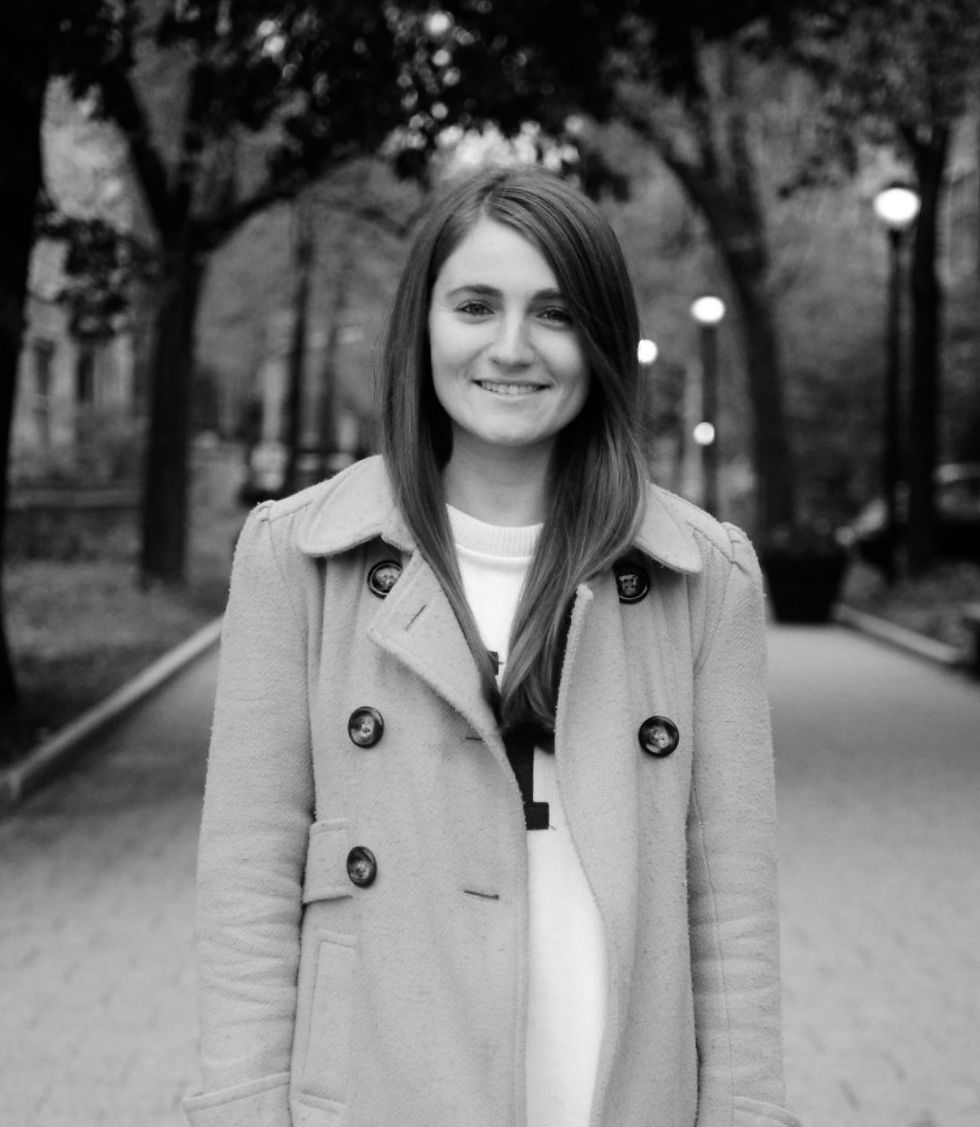
This essay is in dedication to Marina Keegan who continues to evoke a creative possibility in my post-graduate spirit.


Comments